With a Truth Table Calculator, you enter a Boolean expression and the tool generates the output for every possible input combination. It computes results for each row so you can verify logic, debug circuits, and compare expressions quickly.
This guide explains how truth tables work, how to write valid expressions, and how to interpret the results so you can trust the output.
What a Truth Table Calculator Does
A truth table lists all possible values of one or more Boolean inputs and the resulting Boolean output. For each input row, the expression is evaluated using Boolean rules.
A Truth Table Calculator automates this process. Instead of manually checking combinations, it generates the full table instantly and consistently.
Core Concepts: Inputs, Operators, and Outputs
Boolean inputs and outputs
Inputs and outputs are only two values: 0 (False) and 1 (True). If you use multiple variables (like A, B, C), the calculator evaluates the expression for every combination of those variables.
Supported logic operators
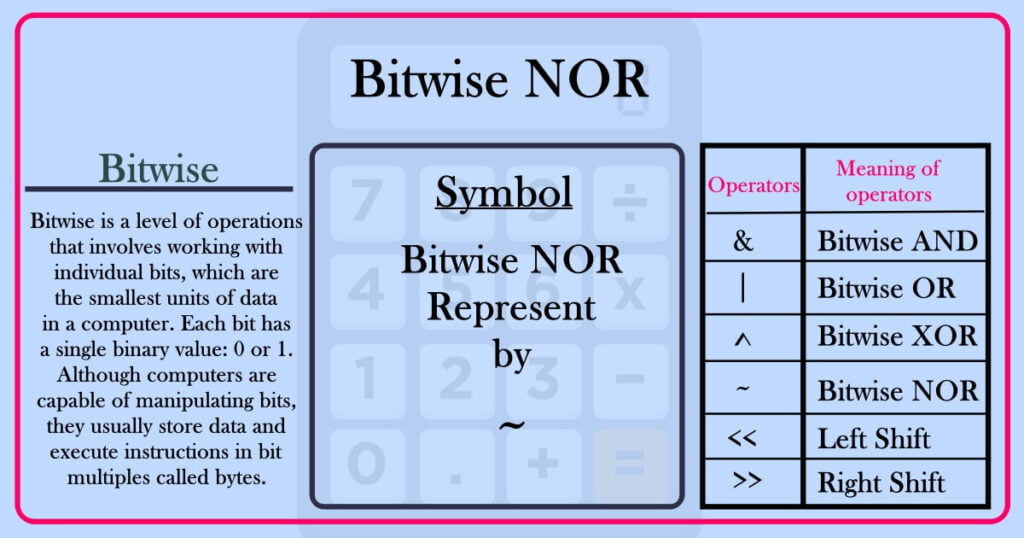
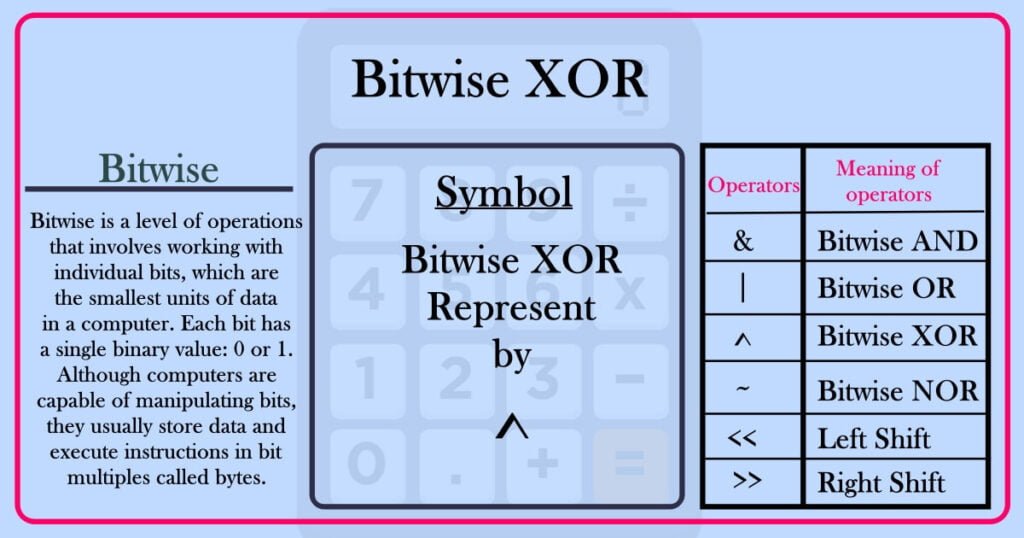
Most truth table tools support common Boolean operators. This article’s calculator supports:
- NOT:
NOT Xor! - AND:
X AND Yor& - OR:
X OR Yor| - XOR:
X XOR Yor^ - NAND:
NAND(X,Y) - NOR:
NOR(X,Y) - IMPLIES:
IMPLIES(X,Y)meaning X → Y - EQUIV:
EQUIV(X,Y)meaning X ↔ Y
Parentheses and precedence
Parentheses control evaluation order. When you write (A OR B) AND C, the calculator evaluates the OR first, then the AND. If you omit parentheses, operator precedence rules apply.
To avoid mistakes, use parentheses around multi-part logic.
How the Truth Table Is Generated
A truth table for n variables has 2ⁿ rows. Each row assigns a unique combination of 0/1 values to the variables, then evaluates the expression.
Step-by-step evaluation
- List variables used in your expression (example: A and B).
- Generate all input combinations (00, 01, 10, 11).
- Evaluate the expression for each row using Boolean operators.
- Record the result as the output value for that row.
Variables and Expression Rules You Can Use
Your expression can use variables like A, B, and C. The calculator evaluates the expression using the current row’s variable values.
Common expression formats
- Simple:
A AND B,NOT A - Mixed:
(A OR B) AND (NOT C) - XOR:
A XOR BorA ^ B - Functions:
NAND(A,B),IMPLIES(A,B)
Truth Table Calculator Output: What to Look For
After you run the calculator, you’ll see a table where each row shows the input values and the computed output (0 or 1). Use it to confirm whether your expression matches the intended logic.
- If the output is 1 only for certain input rows, your logic is selective.
- If the output is always 1, the expression is a tautology.
- If the output is always 0, the expression is a contradiction.
Practical Examples (Real Use Cases)
Example 1: Check a circuit equation
Suppose you think a digital circuit implements (A AND B) OR (A AND NOT B). That expression should equal A (it’s the standard “A AND (B OR NOT B)” pattern).
Run the calculator for A and B, then compare the output column to A. If they match for all rows, your equation is correct.
Example 2: Verify a logic rule for software conditions
In software, you might translate rules like: “Return true when exactly one of two flags is set.” That is XOR: FLAG1 XOR FLAG2.
Use the truth table to verify behavior. You’ll see output 1 only when inputs differ (01 and 10), and output 0 when both are the same (00 and 11).
Frequently Asked Questions
How do I write a Boolean expression for a Truth Table Calculator?
Use variable names like A, B, and C. Combine them with operators such as AND, OR, NOT, and XOR. Add parentheses to control order. If supported, you can also use symbols like !, &, |, and ^. Keep commas out unless a function requires them.
What does “0” and “1” mean in a truth table?
In Boolean logic, 0 means False and 1 means True. The calculator evaluates your expression using these values only. Every row represents a different assignment of 0/1 to the variables, and the output is the resulting Boolean value.
How many rows will my truth table have?
If your expression uses n variables, the truth table has 2^n rows. For example, A and B give 4 rows, while A, B, and C give 8 rows. More variables mean more combinations, but the calculator handles the full set automatically.
Why do parentheses matter?
Parentheses force a specific evaluation order. Without them, precedence rules decide what the calculator computes first. If your logic is complex, parentheses prevent ambiguity and reduce errors. Always group multi-step parts like (A OR B) before combining with AND.
Can I use NAND, NOR, IMPLIES, or EQUIV?
Yes, when the calculator supports these operators as functions. NAND(X,Y) means NOT(X AND Y). NOR(X,Y) means NOT(X OR Y). IMPLIES(X,Y) means X → Y. EQUIV(X,Y) means X ↔ Y. Use commas to separate arguments.
Next Steps
Enter your expression, choose how many variables you want, and generate the table. Then use the output column to confirm equivalence, simplify logic, or validate a rule before you implement it in hardware or software.